
As per case facts, the plaintiff sought title declaration and injunction based on a Will by Dhaniram over ancestral property. Defendants denied the Will's validity and Dhaniram's ownership, claiming sale ...
1 / 25
2026:CGHC:6134
AFR
HIGH COURT OF CHHATTISGARH AT BILASPUR
SA No. 32 of 2013
Reserved on: 14.10.2025
Delivered on: 03.02.2026
Uploaded on : 03.02.2026
•Smt. Laxmi Yadav W/o Shatrughan Yadav Aged About 54 Years
Occupation House Wife, R/o Shanker Nagar, Bilaspur, Tah. And Distt.
Bilaspur (C.G.)
--- Appellant/Plaintiff
versus
1.(Died and Deleted) Smt. Urmila Yadav
2.(Deleted) Umesh Yadav (Died)
2.1 Smt. Urmila Yadav W/o Late Umesh Aged About 57 Years R/o Qtr.
No. 56, Palash, Rajkishore Nagar, Devika Vihar, Bilaspur, Tehsil
Bilaspur, District Bilaspur (C.G.)
2.2 Santosh Yadav S/o Late Umesh Aged About 38 Years R/o Qtr. No.
56 Palash Rajkishore Nagar, Devika Vihar, Bilaspur Tehsil Bilaspur,
District Bilaspur (C.G.)
2.3 Rajeshwari D/o Late Umesh Aged About 28 Years R/o Qtr. No. 56,
Palash Rajkishore Nagar, Devika Vihar, Bilaspur, Tehsil Bilaspur,
District Bilaspur (C.G.)
3.Deepak Yadav S/o Late Rama Yadav Aged About 50 Years Occupation
Property Dealer, R/o Shanker Nagar, Bilaspur (C.G.)
4.Smt. Indrawati W/o Faguram Aged About 48 Years Occupation - House
Wife, R/o Rayees Banger Store, Baaji Gali, Infront Of S.K. Two
Wheeler Workshop, Near Balmukund School, Talapara, Bilaspur (C.G.)
5.Smt. Vrindavati W/o Sunder @ Sundaru Yadav Aged About 46 Years
Occupation House Wife, (Posted As Peon In Government High School
Dayalband), Behind Govt. High School, Dayalband, Bilaspur (C.G.)
2 / 25
6.Smt. Jamuna Bai W/o Jagdish @ Jaggu Yadav (Plumber) Aged About
46 Years Occupation - House Wife, Near Rao Electrical Gali, Infront Of
Shiv Shanker Singhs House, 27 Kholi, Bilaspur (C.G.)
7.Smt. Kapura Yadav W/o Late Ram Khilawan Yadav Aged About 62
Years Occupation Service, Office- P.W.I. Railway Inspection Office,
Bhilai-3, Distt. Durg (C.G.)
8.State Of Chhttisgarh Thru- Collector, Bilaspur (C.G.)
---Respondents
____________________________________________________________
For Appellant : Mr. Surfaraj Khan, Advocate
For Respondents No. 2.1 to 2.3 &
3 to 7 : Mr. Aishwarya Pandey, Advocate
with Mr. P.K. Tulsyan, Advocate
For Respondent No. 8-State : Mr. Aman Tamboli, Panel Lawyer
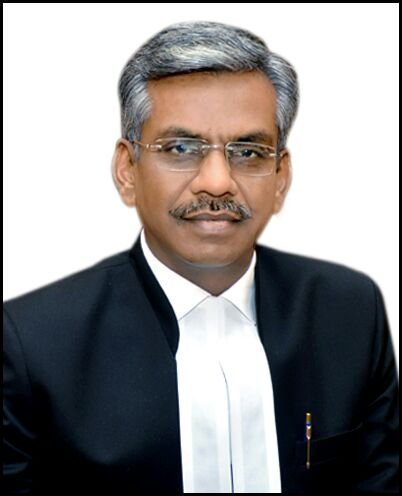
Hon'ble Shri Justice Parth Prateem Sahu
C.A.V. Judgment
1.Appellant-plaintiff has filed this second appeal under Section 100 CPC
challenging the legality and sustainability of impugned judgment and
decree dated 08.10.2012 passed by learned 5
th
Additional District
Judge, Bilaspur, District Bilaspur in Civil Appeal No. 22-A/2011,
whereby learned First Appellate Court dismissed the appeal filed under
Section 96 of CPC affirming the judgment and decree dated
29.03.2011 passed by learned 8
th
Civil Judge, Class-II, Bilaspur, in Civil
Suit No. 65-A/2010 dismissing the suit filed by plaintiff.
2.For the sake of convenience, parties shall be referred to in terms of
their status shown in Civil Suit No. 65-A/2010 before the Trial Court.
3.Brief facts of the case necessary for disposal of this appeal are that
plaintiff filed a civil suit before the trial court seeking declaration of title
and permanent injunction pleading therein that the property situated at
3 / 25
village Torwa Tehsil and District Bilaspur bearing Khasra Nos. 840,
889/3, and 895, admeasuring 0.47, 0.82, and 0.55 acres respectively
(total 1.84 acres) (hereinafter referred to as “the suit land”) was initially
owned by Dhaniram Yadav. Dhaniram purchased the land bearing
khasra no. 840 measuring 0.47 acres from Udiya son of Manohar for
consideration of Rs. 500/- on 02.07.1961. Land bearing khasra No.
889/3 and 895 measuring 0.82 acre and 0.55 acre was purchased by
Dhaniram from Smt. Sukhmat Yadav for consideration of Rs. 1,000/- on
15.05.1970 and came in possession of aforementioned lands. Name of
Dhaniram was also mutated in the revenue records vide mutation
orders No. 1429 and 1430 dated 30.01.1976. Dhaniram was issue-less
and therefore he had kept and brought up plaintiff, daughter of his
brother, as his own and continued to live with her along with his wife as
family after his retirement from Railways. During lifetime, Dhaniram
executed Will on 28.05.2001 bequeathing the suit land to the plaintiff. It
is pleaded that defendant No. 1 in greed of property on false and
fabricated grounds questioned the mutation order dated 30.01.1976 in
favour of Dhaniram in an appeal before the Sub-Divisional Officer,
Bilaspur which was allowed without giving proper opportunity of
hearing to Dhaniram. The order passed by SDO(R.) was put to
challenge before the Additional Commissioner Bilaspur, Division
Bilaspur, which was also dismissed. Aggrieved by which, the order of
Commissioner was put to challenge before the Board of Revenue,
Gwalior, which, upon reorganization of the State of Madhya Pradesh,
was transferred to the Board of Revenue, Bilaspur. During pendency of
said revision before the Board of Revenue, Bilaspur, Dhaniram died on
4 / 25
14.03.2002. Plaintiff submitted an application for substitution of her
name, which remained pending. It was also pleaded that defendant No.
1 also filed an appeal against the order of mutation in favour of
Dhaniram which came to be dismissed. Defendants No. 1 to 3
thereafter influencing Smt. Milapa Bai and Sheela Bai submitted an
application in the pending proceeding before the Board of Revenue in a
revision filed by Dhaniram (since deceased) on 28.03.2005. The Board
of Revenue thereafter dismissed the revision vide order dated
14.09.2005. Application for restoration of revision was filed and also an
application claiming herself to be legal heir of late Dhaniram which also
came to be dismissed on the ground that plaintiff could seek
appropriate relief from the competent civil court. Name of plaintiff
continuously recorded based on the registered Will executed in her
favour, however, defendants therein were making all attempts to sale
the property, subject matter of suit, and also being threat to dispossess
her. Plaintiff in the suit has prayed for relief of declaration that the
plaintiff become owner and possessor of the suit property based on
the Will dated 28.05.2001. The order passed by Board of Revenue
dated 10.07.2009 to be contrary to law. Defendants be restrained from
interfering with the title and possession of plaintiff either themselves or
through other persons.
4.Defendants Nos. 1 to 7 filed a written statement, denying pleadings
made therein. They have specifically denied the pleading with regard to
purchase of property, subject matter of the suit by Dhaniram from Udiya
and Smt. Sukhmat. In fact, they have denied entire pleadings made in
the plaint. It is also pleaded that the alleged sale deed dated
5 / 25
02.07.1961 is an unregistered sale-deed and therefore it is void and
does not confer any right to Dhaniram and consequently the mutation
order passed based on the unregistered sale-deed, also to be void.
The property, subject matter of sale deed dated 15.05.1970 was
ancestral property of Udiya S/o Manohar (husband of Sukhmat). As
there was no partition, Sukhmat Bai did not have any right or title on
the said property bearing Khasra No. 889/3 and 895. She was illiterate
lady i.e., mother of Dhaniram (so called purchaser). It is forged and
fabricated document. The property, subject matter of the suit, was
ancestral property of Udiya son of Manohar who died in the year 1968.
Udiya was having four sons namely Fudku, Rambharos, Dhaniram and
Goverdhan and a wife ie., Sukhmat Bai. After death of Udiya name of
four sons and his widow was to be substituted in revenue records.
There was no partition of the ancestral property between Dhaniram and
his other three brothers and mother. It is also pleaded that as Fudku
and Dhaniram sons of Sukhmat were in railway service, Sukhmat was
not having any need of money. Dhanriram being literate person, playing
cunningly got his name mutated in the entire ancestral property based
on alleged sale deed, one unregistered and another registered stated
to be executed by his mother. The order of mutation dated 30.01.1976
in favour of Dhaniram is also illegal and void. The order of mutation in
favour of Dhaniram was challenged in appeal and it was set aside. In
reply, defendants have pleaded that Dhaniram was issue-less and had
kept his two niece, plaintiff and one Sheela Bai, with him and after their
marriage, they started living in their matrimonial home. Dhaniram has
not executed any Will on 28.05.2001, it is forged and fabricated. On the
6 / 25
alleged date of execution of Will, Dhaniram was very old, his mental
status was not good and further that on the date of execution of Will no
property was recorded in name of Dhaniram and therefore the plaintiff
could not got any right and title based on the Will. It is also pleaded that
Dhaniram died on 14.03.2002 but the suit is not filed within three years
of the death of Dhaniram but is only filed on 28.06.2009 and therefore
the civil suit is barred by limitation as it was not filed within three years.
In additional pleadings, defendants have also pleaded that the property,
subject matter of the suit, is owned by Udiya son of Manohar. Udiya
died in the year 1968 leaving behind four sons namely Fudku,
Rambharos, Dhaniram and Goverdhan, he has also survived by his
widow Smt. Sukhmat Bai who died in the year 1970. There was no
partition of the property between sons and widow of Udiya. Out of four
brothers, Dhaniram was the only person who was more educated. He,
behind the back of other brothers, got his name alone recorded in
revenue records. Mutation of name of Dhaniram alone in ancestral
property came to their knowledge in the year 1997 and thereafter an
appeal was filed challenging the order of mutation which was allowed
and the appeal and revision preferred by plaintiff came to be dismissed.
It is also pleaded that the land transferred through sale deed in favour
of one S.C. Das vide sale deed dated 20.02.1995 was questioned in a
separate civil suit pending before the 9
th
Civil Judge, Class-II, Bilaspur
by defendant No. 1 and others. The property, subject matter of the suit,
is a joint hindu family property, it was not partitioned and therefore
Dhaniram was not having any right and title to execute the Will.
7 / 25
5.Learned trial Court considering the pleadings made by the respective
parties has formulated five issues for consideration. Upon appreciation
of pleadings and evidence of respective parties, dismissed the suit
recording a finding that Ext. P-2 is an unregistered sale deed said to be
executed by Udiya in favour of Dhaniram. It does not confer any title on
the purchaser in view of provision of Section 17 read with Section 49 of
the Registration Act 1908. It is also observed that the sale deed dated
15.06.1970 said to be executed by Sukhmat (mother of Dhaniram) in
favour of Dhaniram to be without any authority of law as name of
Sukhmat was not recorded in revenue record as owner of the property
and further considering that there was no partition of the property of
Udiya between his legal heirs/ legal representatives ie., four sons and
widow. The Will could not be proved in accordance with Section 63 of
the Indian Succession Act readwith Section 68 of the Evidence Act and
held that it could not be proved that the plaintiff is owner and possessor
of the land, subject matter of the suit, to be not proved. Other issues
No. 2 and 3 were also not found to be proved, decided against plaintiff
and dismissed the suit.
6.Learned First appellate court upon appreciating the evidence as
brought by the respective parties has affirmed the finding recorded by
the trial court that the Dhaniram has not accrued any right and title over
the land, subject matter of the suit, pursuant to the sale deeds Ext. P-1
& P-2, further recorded a finding that plaintiff could not able to prove
valid execution of Will Ext. P-3 dated 28.05.2001 in accordance with
law and could not able to succeed in removing the shadow of clouds
over her title based on Will. Learned first appellate court also made an
8 / 25
observation that the plaintiff could not able to prove that she is
successor of late Dhaniram and accordingly dismissed the appeal by
impugned judgment and decree.
7.Learned counsel for plaintiff would submit that both the courts below
erred in recording a finding that Dhaniram was not conferred with any
right or title over the suit property based on the sale deed Ext. P-1 & P-
2. Finding recorded by both the courts below that the Will dated
28.05.2001, Ext. P-3, to be not proved in accordance with the
provisions under Section 63 of the Indian Succession Act, 1925
readwith Section 68 of the Evidence Act to be perverse to the evidence
of PW-3, Dileep Kumar (attesting witness). In support of his
contention, he places reliance upon the decision in case of
Dayashankar and others v. Jaishankar (since deceased) through
his L.Rs. and others reported in 2012 (2) CGLJ 518; and Rajni v.
Basudev Narayan Singh (Smt. Gyaneshwari Devi and Others)
reported in 2013 (2) CGLJ 280.
8.Learned counsel for Defendants No. 1 to 7 would oppose the
submission of learned counsel for plaintiff and would submit that
learned both the courts below upon appreciation of pleadings and
evidence brought on record have rightly recorded a finding and
concluded that Dhaniram, testator of Ext. P-3, was not having any right
and title to bequeath the property as mentioned therein. Dhaniram was
not conferred with any right or title based on unregistered sale deed
Ext. P-2 dated 02.07.1961 executed by Udiya (his father) in his favour
and further that on the date of execution of registered sale deed Ext. P-
1 dated 15.05.1970 the executant/ seller Sukhmat Bai, mother of
9 / 25
Dhaniram and therefore the sale deed executed is null and void.
Partition of ancestral property recorded in the name of Udiya was not
proved and all the four brothers ie., Fudku, Rambharos, Goverdhan
and Dhaniram along with Sukhmat, widow of Dhaniram, were the joint
owner of the property. There is concurrent finding fo the facts recorded
by both the courts below.
9.This second appeal was admitted on 11.02.2015 on the following
substantial questions of law:-
“1. Whether the Revenue Court, SDO
Bilaspur has the power to declare the
registered sale deed as null and void?
2. Whether mutation done on the basis of
the sale deed the mutation could have been
challenged to annul the sale deed 20 years
back?”
10. On 29.08.2025, in exercise of power under Section 105 of CPC,
another question of law has been formulated as under:
“3. Whether both the courts below were
justified in recording its finding that the Will
has not been duly executed, is legal and
justified?”
11.I have heard learned counsel for the parties and also perused the
record of both the courts below.
12.Undisputedly the suit filed by plaintiff seeking declaration of title that
plaintiff has acquired title and is in possession of the suit property
based on Will dated 28.05.2001 and to declare the order dated
10.07.2009 passed by Board of Revenue, Bilaspur, Chhattisgarh to be
contrary to law.
10 / 25
13.Will is filed as Ext. P-3 in which name of testator is mentioned as
Dhaniram son of Udiya aged about 74 years, it was executed in favour
of six persons named therein. In the body of Will, it is mentioned that
the land of his ownership, title and his possession situated at village
Torwa including the property bearing Khasra Nos. 889/3 895 and 840
(subject matter of the Will deed Ext. P-1 and P-2 along with other
property) to have been willed in their favour.
14.According to the provision of law, any person claiming title over any
property based on the Will executed in his/ her favour then even if the
Will is registered it is to be proved before the court in accordance with
the provisions under Section 63 of the Indian Succession Act, 1925
readwith Section 68 of the Evidence Act. Section 63(c) of the Act of
1925 which is relevant in the facts of the case is extracted below for
ready reference:
“Section 63. Execution of unprivileged
wills.-- Every testator, not being a soldier
employed in an expedition or engaged in actual
warfare,
1
[or an airman so employed or
engaged,] or a mariner at sea, shall execute his
will according to the following rules:--
(a) x x x x
(b) x x x x
(c) The will shall be attested by two or more
witnesses, each of whom has seen the testator
sign or affix his mark to the will or has seen
some other person sign the will, in the presence
and by the direction of the testator, or has
received from the testator a personal
acknowledgment of his signature or mark, or of
the signature of such other person; and each of
the witnesses shall sign the will in the presence
of the testator, but it shall not be necessary that
more than one witness be present at the same
11 / 25
time, and no particular form of attestation shall
be necessary.
15.Section 68 of the Evidence Act is also relevant to the facts of the cse,
which is also extracted below B. Venkatamuni v. C.J. Ayodhya Ram
Singh.
“68. Proof of execution of document required
by law to be attested.––If a document is
required by law to be attested, it shall not be
used as evidence until one attesting witness at
least has been called for the purpose of proving
its execution, if there be an attesting witness
alive, and subject to the process of the Court
and capable of giving evidence: 3[Provided that
it shall not be necessary to call an attesting
witness in proof of the execution of any
document, not being a will, which has been
registered in accordance with the provisions of
the Indian Registration Act, 1908 (16 of 1908),
unless its execution by the person by whom it
purports to have been executed is specifically
denied.]”
16.The requirement to prove a valid execution of any privileged Will is that
it shall be attested by two or more witnesses and each of whom has
seen the testator sign or affix his mark to the will or has seen some
other person sign the will, in the presence and by the direction of the
testator, or has received from the testator a personal acknowledgment
of his signature or mark, or of the signature of such other person; and
each of the witnesses shall sign the will in the presence of the testator.
17.Plaintiff to prove pleadings in the plaint had examined herself as PW-1
and Dileep Kumar as PW-3, the attesting witness. PW-1 in her
examination-in-chief had stated that the testator Dhaniram was issue-
less who after retirement from service from Railways started living
along with his wife and with plaintiff. He executed his last Will on
12 / 25
28.05.2001 (registered Will). It is also pleaded that he died on
14.03.2002. In cross-examination, it is admitted that she was having
knowledge of execution of Will by Dhaniram of the property of his
share. Before death of Dhaniram, she became aware of execution of
will. She has not made any statement as to whether the Will was
executed in her presence or not and therefore she is not the witness to
the execution of Will.
18.PW-3, Dileep Kumar, in his examination-in-chief has stated that
Dhaniram prior to the date before 28.05.2001 (date of execution of Will)
called him and expressed his view that he wanted to execute Will and
he had to come to witness the Will. He also stated that on asking of
Dhaniram, he along with Dhaniram and Santosh Yadav came to the
Registrar Office at Bilaspur and have put signature on the Will. In
cross-examination, he stated that at the time of execution of Will, he
was being with Dhaniram,Santosh Yadav and Shatrughan Yadav. He is
not aware as to how many property, and which property to whom,
Dhaniram bequeathed in his Will. In para-8, this witness admitted that
the Will deed was typed prior to 28.05.2001. He also made statement
that he is not aware as to how many days before 28.05.2001 Will was
typed. He has not come when the Will deed was typed. In his presence
Will was not prepared and he has only put his signature over it. In
earlier paragraph, this witness has stated that the Will was typed in
Registrar Office and thereafter he changed his statement and stated
that the Will was typed in District Court where Advocate C.L. Yadav
used to sit.
13 / 25
19.From the aforementioned statement of this witness, it is prima facie
appearing that he made contradictory statement with regard to
preparation of Will due to which testimony of this witness cannot be
accepted as reliable evidence.
20.The law with regard to prove of Will is no longer res integra. Section 63
of the Indian Succession Act, 1925 and Section 68 of the Evidence Act,
1872 are relevant in this regard. Propounder of a Will must examine
one or more attesting witnesses to prove the valid execution of Will and
under the aforementioned provision of law the onus is placed on the
propounder to remove all suspicious circumstances, of valid execution
of Will.
21.In the case of Jaswant Kaur v. Amrit Kaur, reported in (1977) 1 SCC
369 Hon’ble Supreme Court had observed that when a Will is allegedly
shrouded in suspicion, its proof ceases to be a simple lis between the
plaintiff and the defendant. What, generally, is an adversary proceeding
becomes in such cases a matter of the court's conscience and then the
true question which arises for consideration is whether the evidence
led by the propounder of the Will is such, as to satisfy the conscience
of the court that the will was duly executed by the testator. It is
impossible to reach such satisfaction unless the party which sets up
the Will offers a cogent and convincing explanation of the suspicious
circumstances surrounding the making of the Will.
22.In case of Bharpur Singh v. Shamsher Singh, reported in (2009) 3
SCC 687 hon’ble Supreme Court has narrated few suspicious
circumstances being illustrative but not exhaustive as under:
14 / 25
“23. Suspicious circumstances like the following
may be found to be surrounded in the execution
of the will:
(i) The signature of the testator may be very
shaky and doubtful or not appear to be his usual
signature.
(ii) The condition of the testator's mind may be
very feeble and debilitated at the relevant time.
(iii) The disposition may be unnatural,
improbable or unfair in the light of relevant
circumstances like exclusion of or absence of
adequate provisions for the natural heirs without
any reason.
(iv) The dispositions may not appear to be the
result of the testator's free will and mind.
(v) The propounder takes a prominent part in the
execution of the will.
(vi) The testator used to sign blank papers.
(vii) The will did not see the light of the day for
long.
(viii) Incorrect recitals of essential facts.”
23.In the aforementioned case, Hon’ble Supreme Court further observed
that the circumstances narrated as above are not exhaustive subject to
offering of reasonable explanation, existence thereof must be taken
into consideration for the purpose of arriving at a finding as to whether
the execution of the will had been duly proved or not. It may be true
that the will was a registered one, but the same by itself would not
mean that the statutory requirements of proving the will need not be
complied with.
24.In case of B. Venkatamuni v. C.J. Ayodhya Ram Singh, reported in
(2006) 13 SCC 449 Hon’ble Supreme Court has held that the court
must satisfy its conscience as regards due execution of the Will by the
testator and the court would not refuse to probe deeper into the matter
only because the signature of propounder on the Will is otherwise
proved.
15 / 25
25.In the light of above decisions of Hon’ble Supreme Court, if the facts of
the case in hand is taken into consideration would show that the
document Will Ext. P-3 has been stated to be forged and fabricated
document by the defendants. The attesting witness Dilip Kumar, PW-3,
though had made an attempt to state that the Will was typed in the
Registrar office, thereafter correct it to say that it is typed in civil court
and he thereafter in his cross-examination stated that it was typed prior
to 28.05.2001 (on the date of execution of Will). In his evidence, he
clearly stated that he is not aware as to what and which property is
given to whom. The Will is executed in favour of six persons, out of
which suit was filed by only one, ie., Laxmi Yadav. W/o Shatruhan
Yadav. On the date of execution of Will, Shatruhan Yadav was present
in the Registrar office as stated by attesting witness PW-3.
26.Husband of beneficiary of the Will ie., Shatruhan Yadav husband of
Laxmi Yadav (PW-1) has got prepared the document Ext. P-3 Will prior
to coming in picture of attesting witness. This attesting witness has
further admitted in evidence that he has not read the Will.
27.In the above facts of the case, it appears to be suspicious as to
whether the testator was aware about contents and the properties,
subject matter of disposition mentioned in the Will. The beneficiary of
the Will actively participated in preparation of the Will through her
husband.
28.In the aforementioned facts of the case, even if the evidence of PW-3
to the extent that signing of the Will by testator to be proved will not
prove that the testator had understood the nature of effect of
disposition as mentioned on the Will, more so when in the facts of the
16 / 25
attesting witness PW-3 had made statement that he is not aware as to
where the Will was typed which is brought for registration in the
Registrar office and which property is given to whom.
29.From the aforementioned evidence of PW-3, Dileep Kumar, the clouds
on the valid execution of Will could not be removed as the testimony of
this witness appears to be not reliable. Apart from the above, a person
can execute the Will of the property of which he is having right and title.
From the evidence of plaintiff, PW-1, it is appearing that the property
bearing Khasra No. 840, subject matter of the Will deed, Ext. P-2,
dated 02.07.1961 and the land bearing Khasra No. 889/3 and 895
measuring 0.82 and 0.55 acres respectively of the sale deed dated
15.05.1970 was ancestral property (as admitted in para-12 of her
deposition). He also stated that she is grand-daughter of Udiya and
Sukhmat and they were having four sons namely Fudku, Rambharos,
Dhaniram and Goverdhan. Though she made statement that there was
partition between all the four brothers of his father, however, she made
further statement that she is not aware as to which brother out of four
received which property and where. She also stated that she was not
aware about when partition took place between four brothers. In para-
13, she admitted that all the brothers were cultivating agricultural lands
jointly.
30.In the aforementioned facts of the case, evidence of plaintiff herself, it
is apparent that the property, subject matter of the sale deed Ext. P-1
and P-2 was co-parcenary property being ancestral property of late
Udiya. Sale deed said to be executed by Udiya, original owner of the
ancestral property, was an unregistered sale deed (Ext. P-2). Perusal
17 / 25
of sale deed Ext. P-2 would reflect that it mentions that it is to be
executed by Udiya son of Manohar, in favour of Dhaniram son of Udiya
on 02.07.1961.
31.The value of the property/ sale consideration is mentioned as Rs. 500.
However, the sale deed is not registered in accordance with the
Registration Act, 1908. Section 17 of the Registration Act mandates
that non-testamentary instruments which purport or operate to create,
declare, assign, limit or extinguish, any right, title or interest to be
registered. Section 49 of this Act talks of effect of non-registration of
documents required to be registered. It mentions that no document
required by section 17 [or by any provision of the Transfer of Property
Act, 1882 (4 of 1882),] to be registered to affect any immovable
property comprised therein, or confer any power to adopt, or be
received as evidence of any transaction affecting such property or
conferring such power.
32.In the case at hand, admittedly, Ext. P-2 is an unregistered document
and therefore it does not affect any immovable property comprised
therein and therefore Dhaniram has not acquired any title of property
mentioned in Ext. P-2 which mentions transfer of property bearing
Khasra No. 840 measuring 0.47 acre.
33.In the aforementioned facts of the case, as no right or tile of Dhaniram
was created on land bearing Khasra No. 840 based on the sale deed
Ext. P-2, Dhaniram was not having any right or title to execute the Will
of the aforementioned land in favor of others. It is settled law that a
person cannot transfer better title than what he possessed.
18 / 25
34.So far as the sale deed Ext. P-1 is concerned, it is executed by Smt.
Sukhmat Bai widow of Udiya on 15.05.1970 in favour of his son
Dhaniram. As discussed in preceding paragraphs, the property, subject
matter of the sale deed bearing Khasra No.. 889/3 and 895 as admitted
by plaintiff was ancestral property of Udiya, he was having four sons
namely Fudku, Rambharos, Dhaniram and Goverdhan. Partition
between four sons and widow of Udiya is not proved in accordance
with law. Defendants have denied the fact of partition between four
brothers. Ext. D-1 is the copy of Adhikar Abhilesh in which name of
Rama son of Fudku and others legal heirs of Fudku is also recorded
along with others in revenue records against the land bearing Khasra
No. 840, 889/3 and 895.
35.It is admitted case of plaintiff that the property, subject matter of sale
deed, Ext. P-1, is the ancestral property of Udiya and not of Sukhmat.
In the ancestral property of husband, his widow can acquire separate
right and title over the joint property after partition between the co-
owners of the property. Plaintiff could not proved the fact that after
death of Udiya there was partition between her and her four sons and
she received the property bearing Khasra No. 889/3 and 895, subject
matter of sale deed Ext. P-1 in her share. According to the provision
under Section 101 of the Evidence Act, it is burden upon the plaintiff to
prove the facts pleaded of partition in which plaintiff utterly failed and
therefore plaintiff failed to prove that the seller of land, subject matter of
Ext. P-1 was having right and title over the property, subject matter of
sale deed for valid transfer of immovable property bearing Khasra Nos.
889/3 and 895 through registered sale deed. Mere registration of sale
19 / 25
deed will not in itself be sufficient to prove that the sale deed executed
transferring the immovable property in favour of purchaser is valid in
law. As discussed above that for transfer of right and title, even
through registered sale deed, the seller is required to first have the title
and right over the property in accordance with law. If the seller himself
is not having the right and title over the property, the purchaser would
not confer any right and title over such property as mentioned in sale
deed.
36.Even if the submission made by learned counsel for appellant or case
set up by the plaintiff is considered that Sukhmat Bai executed the
registered Will deed, Ext. P-1, in favour of Dhaniram, her son, then also
apart from the above discussions, entitlement of the Sukhmat Bai to be
owner of the property, subject matter of sale-deed Ext. P-1, if registered
sale deed is to be taken into consideration looking to the relationship
between the two being mother and son, the question arises for
consideration whether the sale deed is a nominal sale deed and
therefore it is a sham document. Hon’ble Supreme Court in the case of
Shanti Devi (since deceased) through LRs. Goran vs. Jagan Devi
and others reported in 2025 SCC OnLine SC 1961 referring decision
of Kewal Krishnan v. Rajesh Kumar and others, reported in (2022)
18 SCC 489 while considering the fact that whether the defendants
have paid any sale consideration to the plaintiff while purchasing the
plaintiff’s share in the property, in para 34, has observed thus:
“i. First, that the sale of an immovable property
would have to be for a price and such a
payment of price is essential, even if it is
payable in the future. If a sale deed is executed
without the payment of price, it is not a sale at
all in the eyes of law, specifically under Section
20 / 25
54 of the Transfer of Property Act, 1882. Such
a sale without consideration would be void and
would not affect the transfer of the immovable
property.
ii. Secondly, that, in the said case, the
defendants could not rebut the allegation of the
plaintiff that no sale consideration was paid as
no evidence was adduced to indicate - (a) the
actual payment of the price mentioned in the
sale deeds and, (b) that the defendants had any
earning capacity at the time of the transaction
such that the sale consideration could have
been paid. As such the sale deed being void for
want of valid consideration, could not be said
to have affected the one-half share of the
plaintiff in the suit properties nor have
conferred any right of title on the defendants. In
fact, it was held that the sale deeds were a sham
and must be ignored.
iii. Lastly, it was reiterated that a document that
is void need not be challenged by seeking a
declaration as the said pleas can be set up and
proved even in collateral proceedings.
The relevant observations are thus:
“18. Section 54 of the Transfer of Property Act,
1882 (for short “the TP Act”) reads thus:
“54. “Sale” defined.—“Sale” is a transfer of
ownership in exchange for a price paid or
promised or part-paid and part-promised.
Sale how made.—Such transfer, in the case of
tangible immovable property of the value of
one hundred rupees and upwards, or in the
case of a reversion or other intangible thing,
can be made only by a registered instrument.
In the case of tangible immovable property of a
value less than one hundred rupees, such
transfer may be made either by a registered
instrument or by delivery of the property.
Delivery of tangible immovable property takes
place when the seller places the buyer, or such
person as he directs, in possession of the
property.
Contract for sale.—A contract for the sale of
immovable property is a contract that a sale of
such property shall take place on terms settled
between the parties.
It does not, of itself, create any interest in or
charge on such property.”
21 / 25
Hence, a sale of an immovable property has to
be for a price. The price may be payable in
future. It may be partly paid and the remaining
part can be made payable in future. The
payment of price is an essential part of a sale
covered by Section 54 of the TP Act. If a sale
deed in respect of an immovable property is
executed without payment of price and if it
does not provide for the payment of price at a
future date, it is not a sale at all in the eye of
the law. It is of no legal effect. Therefore, such
a sale will be void. It will not effect the transfer
of the immovable property.
19. Now, coming back to the case in hand, both
the sale deeds record that the consideration has
been paid. That is the specific case of the
respondents. It is the specific case made out in
the plaints as originally filed that the sale
deeds are void as the same are without
consideration. It is pleaded that the same are
sham as the purchasers who were minor sons
and wife of Sudarshan Kumar had no earning
capacity. No evidence was adduced by
Sudarshan Kumar about the payment of the
price mentioned in the sale deeds as well as the
earning capacity at the relevant time, of his
wife and minor sons. Hence, the sale deeds will
have to be held as void being executed without
consideration. Hence, the sale deeds did not
affect in any manner one half-share of the
appellant in the suit properties. In fact, such a
transaction made by Sudarshan Kumar of
selling the suit properties on the basis of the
power of attorney of the appellant to his own
wife and minor sons is a sham transaction.
Thus, the sale deeds of 10-4-1981 will not
confer any right, title and interest on
Sudarshan Kumar's wife and children as the
sale deeds will have to be ignored being void. It
was not necessary for the appellant to
specifically claim a declaration as regards the
sale deeds by way of amendment to the plaint.
The reason being that there were specific
pleadings in the plaints as originally filed that
the sale deeds were void. A document which is
void need not be challenged by claiming a
declaration as the said plea can be set up and
proved even in collateral proceedings.
20. Hence, the issue of bar of limitation of the
prayers for declaration incorporated by way of
an amendment does not arise at all. The
additional submissions made by the
22 / 25
respondents on 16-11-2021 have no relevance
at all.
21. As no title was transferred under the said
sale deeds, the appellant continues to have
undivided half-share in the suit properties. That
is how the District Court passed the decree
holding that the appellant is entitled to joint
possession of the suit properties along with
Sudarshan Kumar. Therefore, for the reasons
recorded above, by setting aside the impugned
judgment and order [Rajesh Kumar v. Kewal
Krishan, 2015 SCC OnLine P&H 20782] of the
High Court, the decree passed by the District
Court deserves to be restored.”
(Emphasis supplied)
37.In the case at hand also, firstly title of Sukhmat Bai, of the land subject
matter of Ext. P-1 and its valid execution is not proved. The purchaser
will not get any right or title on suit property of Ext. P-1.
38.In case of Bharpur Singh (supra), Hon’ble Supreme Court has held
that registration of the Will by itself would not amount that the statutory
requirement of proving the Will need not be complied with.
39.Learned Trial Court upon appreciation of the evidence on Will had
taken note of evidence of PW-3, attesting witness, that he admitted that
Will was not prepared in front of him. He also admitted that prior to
28.05.2001, document Will was prepared and further in the ‘Will’ space
is left vacant at C to C ie., mentioning of date. Learned Trial court taken
note of the fact that this witness admitted that he is not aware of the
fact that by Will which beneficiary getting what share of the property.
Trial Court has further considered that out of six beneficiaries, only one
has filed the suit and other beneficiaries of the Will have not been
arrayed as defendants to the civil suit and has taken into consideration
it also to be one of the suspicious circumstances and held that not
giving any explanation of not impleading other beneficiaries of the Will
23 / 25
to be party to the suit to be one of the grounds for drawing adverse
inference. Trial court in fact has disbelieved the testimony of attesting
witness PW-3. The finding of the Trial court was affirmed by the first
appellate court on the proof that the plaintiff failed to prove the due
execution of Will meeting with the requirement under Section 63 of the
Indian Succession Act, 1925. There is concurrent finding fo the facts of
both the courts below. Hon’ble Supreme Court in the case of State of
Haryana v. Harnam Singh, reported in (2022) 2 SCC 238 has
observed thus:
“9. The opinion of the High Court was that the
will was proved in terms of Section 63 of the
Succession Act, 1925 and while coming to such
finding the High Court went deep into factual
inquiry. It is evident from the judgment under
appeal that the formulation of the question of
law was on question of fact only. Moreover, in
formulating the question on the basis of which
the appeal was admitted, the High Court
proceeded on the basis that the will was proved
in terms of Section 63 of the Succession Act,
1925. The person claiming to be scribe of the
will as well as the two attesting witnesses
deposed to support the case of the original
plaintiff, but both the trial court and the first
appellate court disbelieved their testimony. The
thumb impression of Kishan Singh was not
matched. There was contradiction in the
evidence of attesting witnesses as regards the
place of execution. The requirement of Section
63 of the Succession Act, 1925 cannot be said to
have been fulfilled by mechanical compliance of
the stipulations therein. Evidence of meeting the
requirement of the said provision must be
reliable. The fact-finding courts did not find
such evidence to be reliable.”
40.Hon’ble Supreme Court in the aforementioned case further considering
the fact that when there is concurrent finding of fact recorded by both
the courts below, the finding made by the High Court has held that the
24 / 25
factual enquiry by the High Court in second appeal to be not
permissible in exercise of jurisdiction of Section 100 of CPC has
observed thus:
“11. Thus, the High Court erred in formulating
the question of law on the basis that the will
was proved in terms of Section 63 of the
Succession Act, 1925. In fact, both the fact-
finding courts—the trial court and the first
appellate court, had found that the will was not
proved. The evidence of the witnesses was
disbelieved as they failed to inspire the
confidence of fact-finding courts. The High
Court, however, went into a detailed factual
enquiry to come to its finding. We are of the
opinion that an enquiry of such nature was
impermissible while hearing an appeal under
Section 100 of the Civil Procedure Code, 1908.
12. In our opinion the finding of the trial court
and the first appellate court ought not to have
been interfered with by the High Court. We do
not find any perversity in the judgment of the
first two courts of facts.”
41.This court while admitting the appeal on 11.02.2015 has formulated two
questions of law as extracted in preceding paragraph. However, the
question of law formulated was not the issue considered by the trial
court or the first appellate court. The first appellate court considered the
above based on the grounds raised therein on the formulated
questions of law; “Whether the property, subject matter of suit was
ancestral property of the parties?; Whether the suit property was
partitioned?’ Whether the original owner of the land, Udiya, has
partitioned the property to his legal heirs? and; whether the residential
accommodation was partitioned? The said question has been
formulated based on the grounds raised by the appellant therein and
the submission of learned counsel for the parties. The material issue
involved in the facts of the case whether due execution of the Will has
25 / 25
not found proved but then in the facts of the case and the pleadings
made therein as discussed, as also the veracity of sale deeds Ext. P-1
and P-2, additional substantial question of law formulated under
Section 105 of CPC was deemed in the facts of the case and it has
also been decided as above.
42.In the aforementioned facts of the case and decisions of Hon’ble
Supreme Court, in the considered opinion of this Court, appeal being
devoid of substance is liable to be and is hereby dismissed
accordingly.
43.Decree be drawn up accordingly.
Sd/-
(Parth Prateem Sahu)
Judge
pwn

Legal Notes
Add a Note....