
1
2026:CGHC:907-DB
The date when
the judgment is
reserved
The date when
the judgment is
pronounced
The date when the
judgment is uploaded on
the website
Operative Full
14.10.2025 07.01.2026 -- 07.01.2026
AFR
HIGH COURT OF CHHATTISGARH AT BILASPUR
CRA No. 1103 of 2014
Judgment Reserved on : 14.10.2025
Judgment Delivered on : 07.01.2026
1 - Tarun Kumar S/o Late Sitaram Thakur, Aged About 32 Years,
R/o Village Dhamki, PS Kawardha, Civil And Revenue District
Kabirdham Kawardha C.G.
2 - Mithla Devi W/o Late Sitaram Thakur, Aged About 55 Years,
R/o Village Dhamki, PS Kawardha, Civil And Revenue District
Kabirdham Kawardha C.G.
3 - Ku. Neelu @ Vinamrata D/o Late Sitaram Thakur, Aged About
25 Years, R/o Village Dhamki, PS Kawardha, Civil And Revenue
District Kabirdham Kawardha C.G.
... Appellants
versus
1 - State Of Chhattisgarh Through District Magistrate, Kabirdham,
Distt. Kabirdham (Kawardha) C.G.
... Respondent
2
For Appellants :Mrs. Indira Tripathi, Advocate
For Respondent :Mr. Ankur Kashyap, Dy. Govt. Advocate
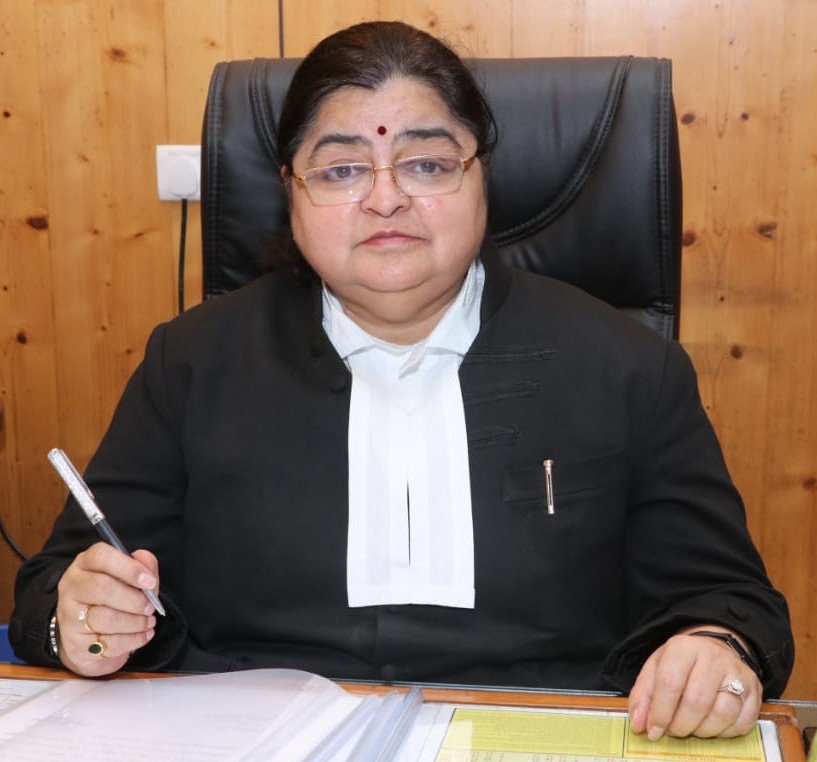
Hon'ble Smt. Justice Rajani Dubey &
Hon'ble Shri Justice Amitendra Kishore Prasad
(C A V Judgment)
Per Rajani Dubey, J
1.This appeal is directed against the impugned judgment of
conviction and order of sentence dated 16.10.2014 passed
by learned Fast Track Court of Additional Session Judge,
Kabirdham (Kawardha), C.G., in S.T. No.09/2014 whereby
and whereunder appellants have been held guilty for
commission of offence and sentenced as described below :-
CONVICTION SENTENCE
Under Section 302/34
IPC
Imprisonment for life with fine of
Rs.5,000/- each, in default of
payment of fine amount to
undergo additional R.I. for 01
year.
Under Section 201/34
IPC
R.I. for 07 years with fine of
Rs.6,000/- each and in default
of payment of fine amount, to
undergo additional R.I. for 01
year.
Both the sentences were
directed to run concurrently.
2.The prosecution story, leading to conviction of the
3
accused/appellants is that complainant Bhan Singh Thakur’s
daughter, Pinky Thakur, was married to accused No. 01 -
Tarun Thakur, on 14.07.2013. After the marriage, the
deceased was allegedly subjected to taunts and harassment
by the accused persons on the allegation that she had
brought insufficient dowry. It was further alleged that
accused Tarun Thakur (A-1), who used to speak with the
deceased daily on her mobile phone prior to the marriage
and after the engagement, discontinued regular
communication after the marriage and thereafter maintained
only formal interaction with her. It was also alleged that
accused Tarun Thakur (A-1) demanded a sum of
Rs.70,000/- from the deceased on the pretext that he had
purchased land/plot at Raipur. He was also doubting
chastity of the deceased and repeatedly threatened that her
photographs would be circulated in Kawardha and that her
mobile call details would be obtained, whereby her entire
history would be revealed. According to the prosecution,
whenever the deceased visited her parental home at
Kawardha on festivals and family occasions, she disclosed
that the accused persons were harassing and pressurizing
her in connection with the demand of Rs.70,000/-. It was
4
alleged that in this manner the accused persons subjected
the deceased to continuous physical and mental cruelty and
ultimately caused her death by setting her on fire. It was
further alleged that thereafter the accused persons
attempted to conceal the incident by cleaning and tampering
the place of occurrence and, thereby causing
disappearance of evidence. On the information of
accused/appellant Tarun (A-1), merg No.46/2013 was
registered vide Ex.P-14. Inquest on the body of deceased
was prepared vide Ex.P-2 and dead body was sent for
postmortem examination to District Hospital, Kabirdham,
where postmortem examination was conducted by Dr.
Santosh Luniya (PW-8) and gave his report under Ex.P-13
noticing following injuries/symptoms :-
(i)Body was supine in position, eyes were
closed.
(ii)Kerosene smell was coming from body.
Tongue bite in between teeth.
(iii)Extensive burn except sole (foot), more
than 95%.
(iv)Cloths and garments were burnt and
adherent to the body.
(v)Both the legs and hands were semi flexed,
rigor mortis was present
5
(vi) Nasal froth was present. Skin was black in
colour and peeled off.
(vii)Some parts of the body tissues were redish
in colour.
The autopsy surgeon opined the cause of death
of deceased to be shock due to extensive burn of
body.
3.Police prepared spot map vide Ex.P-10. Some part of burnt
skin, burnt wood, and empty box of kerosene were seized
from the spot vide Ex.P-12. On24.09.2013, complainant
Bhan Singh Thakur (PW-1) filed written report vide Ex.P-1,
based on which, after due investigation, an FIR (Ex.P-15)
was registered against the accused persons for the offence
punishable under Sections 304-B, 306, 201, 34 of IPC. On
18.12.2013, Patwari prepared spot map vide Ex.P-8. During
the course of investigation, complainant moved an
application (Ex.P-3) for submitting bills of purchased articles
in the marriage. The diary of deceased was seized vide
Ex.P-9.
4.After completing usual investigation, charge sheet was filed
against the accused-appellants under Sections 302, 304-B,
306, 201, 34 of IPC ,to which the accused-appellants
6
abjured their guilt and pleaded for trial.
5.After filing of the charge sheet, the learned Trial Court
framed charges against the appellants under Sections 304-
B/34 or 306/34, in alternate Sections 302/34 and 201/34 of
the IPC.
6.So as to hold the accused-appellants guilty, the prosecution
has examined as many as 12 witnesses. Statements of the
accused-appellants were also recorded under Section 313
of the CrPC in which they denied the circumstances
appearing against them in the prosecution case, pleaded
innocence and false implication. No defence witness was
examined in this case.
7.The learned trial Court after hearing counsel for the
respective parties and considering the material available on
record, has convicted and sentenced the accused-
appellants as mentioned in para 1 of this judgment. Hence,
this appeal.
8.Learned counsel for the appellants respectfully submits that
the impugned judgment of conviction under Sections 302/34
and 201/34 of the IPC is contrary to the evidence on record
and unsustainable in law. The undisputed facts establish
7
that the marriage of deceased Pinky Thakur was
solemnized on 14.07.2013 and the unfortunate incident
occurred on 19.09.2013 at about 9:00 a.m. The Marg
intimation (Ex.P-14) was promptly given by appellant No.1
on the same day at 16:20 hours, clearly demonstrating his
bonafide conduct. At the time of the Marg, the parents of the
deceased were present, yet no allegation of cruelty, demand
of dowry, abetment or homicide was raised. Learned
counsel further submits that the prosecution case is entirely
based on the statements of Bhan Singh Thakur (PW-1) and
Kumari Bai (PW-2), father and mother of deceased
respectively, who have admittedly made no complaint either
at the time of Marg or immediately after the incident. The
written report was lodged belatedly on 24.09.2013 and the
FIR was registered only on 26.09.2013, without any
plausible explanation for such delay. Learned counsel also
submits that there is no eye-witness to the incident, no
memorandum statement, and no incriminating recovery
linking the appellants to the alleged offence of murder.
Independent witnesses, including Dhiraja Bai (PW-4),
neighbor, have not supported the prosecution case, while
Ramesh Sharma (PW-6) and Raiwan Das (PW-9) clearly
8
stated that at the time of the incident the appellants were
away for Ganesh emersion and none of them were present
in the house. Learned counsel also submits that medical
evidence completely rules out homicidal death. The
postmortem report (Ex.P-13) and the testimony of Dr.
Santosh Luniya (PW-8), unequivocally establish that the
deceased sustained 95% burn injuries, there were no
external or internal injuries suggestive of violence or
struggle, soot particles were present in the trachea, and the
death was due to shock caused by excessive burns, clearly
indicating a suicidal act. The doctor has specifically opined
that the nature of death was suicidal and not homicidal.
Further, the personal diary of the deceased (Ex.P-5), duly
proved through expert handwriting opinion (Ex.D-7), reveals
her mental state and categorical dissatisfaction with residing
in the village. Entries dated 18.09.2013, just one day prior to
the incident, clearly reflect her unwillingness to stay at her
matrimonial home in the village and her extreme emotional
distress, including expressions that she would either leave
or die. This documentary evidence strongly supports the
defence case of suicide for personal reasons, unrelated to
any cruelty or provocation by the appellants. It has been
9
also submitted that significantly the learned Trial Court itself
acquitted the appellants of the charge under Section 304-B
IPC, thereby negativing the allegation of dowry death. In the
absence of any direct, circumstantial or medical evidence
indicating murder, the conviction under Sections 302/34 and
201/34 of IPC is wholly perverse. There is no proof of
causing death, no proof of destruction of evidence, and no
material to establish that the appellants had any role
whatsoever in the incident. Thus, In view of the above facts,
the accused/appellant may be acquitted by allowing the
appeal.
Reliance has been placed on the decisions of Hon’ble
Apex Court in the matter of Nilesh Baburao Gitte Vs. State
of Maharashtra reported in 2025 INSC 1191 : 2025
Supreme (SC)1775.
9.On the other hand, learned State counsel has supported the
impugned judgment and submits that the prosecution has
successfully proved its case against the appellants beyond
reasonable doubt on the basis of a complete and unbroken
chain of circumstantial evidence, as discussed by the Trial
Court particularly from paragraph 32 of the judgment. The
present case is admittedly based on circumstantial
10
evidence, and the law is well settled that where direct
evidence is not available, conviction can be founded on
circumstantial evidence provided the chain of circumstances
is complete and points unerringly towards the guilt of the
accused. In the present case, the Trial Court has correctly
appreciated the evidence of PW-01 to PW-08 and PW-12,
which cumulatively establish the necessary chain of
circumstances. The place of occurrence is the matrimonial
house of the deceased, which was in exclusive control and
possession of the appellants. The incident occurred within
the four walls of the house, and therefore, the appellants
were under a special obligation to explain the circumstances
under which the deceased sustained fatal burn injuries. The
prosecution has successfully proved the place of incident
through seizure memo Ex.P-12 and the testimonies of
prosecution witnesses, which clearly establish that
kerosene, burnt articles, and remnants of the incident were
recovered from the house of the appellants. Further, the
presence of the accused persons in the house and their
proximity to the incident has been duly established through
the statements of PW-01 to PW-08 and PW-12. These
witnesses have consistently stated about the matrimonial
11
life of the deceased, her residence in the house of the
appellants, and the circumstances immediately preceding
and subsequent to the incident. The Trial Court has rightly
relied upon their testimonies to conclude that the appellants
were present and had the opportunity to commit the offence.
It has been further submitted that the conduct of the
accused after the incident is a relevant circumstance under
Section 8 of the Evidence Act. The prosecution has brought
on record material inconsistencies and unnatural conduct on
the part of the appellants, which strengthens the prosecution
case. The seizure of articles from the place of incident,
including kerosene container and burnt materials, further
corroborates the prosecution version. The Trial Court has
also correctly applied the principle that when an unnatural
death occurs in the matrimonial home, the burden shifts
upon the accused to explain the circumstances under
Section 106 of the Evidence Act. The appellants have failed
to offer any cogent or satisfactory explanation as to how the
deceased sustained fatal burn injuries inside their house.
Such failure provides an additional link in the chain of
circumstances against them. The cumulative effect of the
circumstances proved by the prosecution particularly the
12
unnatural death of the deceased by burning, the occurrence
inside the matrimonial house, the presence and conduct of
the accused, the recovery of incriminating articles from the
spot, and the consistent testimony of PW-01 to PW-08 and
PW-12—forms a complete chain which leaves no
reasonable hypothesis other than the guilt of the appellants.
The learned Trial Court has minutely examined the oral and
documentary evidence, assigned cogent reasons, and has
rightly arrived at the conclusion of guilt. The findings
recorded are based on proper appreciation of evidence and
settled principles of law governing circumstantial evidence.
No perversity, illegality or infirmity has been pointed out
warranting interference by this Court. Thus, the impugned
judgment of conviction and sentence is just, legal and well-
reasoned, and deserves to be affirmed.
10.We have heard learned counsel for the parties and perused
the material available on record.
11.It is apparent from the record of learned Trial Court that the
learned Trial Court framed charges against the appellants
under Sections 304-B/34 or 306/34, in alternate Sections
302/34 and 201/34 of the IPC & after after appreciation of
oral and documentary evidence, the learned trial Court
13
convicted the appellants under Section 302/34 and 201/34
of IPC & sentenced them as described in para 01 of this
judgment.
12.The first question which arises for consideration before this
Court whether the death of deceased Pinky Thakur was
homicidal or not.
13.It is an admitted position in this case that deceased Pinky
Thakur got married to accused/appellant Tarun Kumar (A-1)
on 14.07.2013 and she died on 19.09.2013. It is also not
disputed that deceased Pinky Thakur died due to burn
injuries.
14.With respect to homicidal death of deceased Pinky Thakur,
we have examined the evidence of Raiwan Das (PW-9),
Assistant Sub Inspector, Police Station – Kawardha. He has
stated that on on 19.09.2013, on the information given by
informant accused/appellant Tarun Kumar (A-1), he
recorded the merg intimation No.46/2013 vide Ex.P-14.
Thereafter, he went to the place of occurrence and prepared
nazri naksha vide Ex.P-10. He has also stated that on
19.09.2013, he had seized pieces of burnt skin, pieces of
burnt wood and box of kerosene vide Ex.P-12. He has also
stated that after merg inquiry, on 26.09.2013, he lodged an
14
FIR being Crime No.346/2013 against the accused persons
for the offence under Sections 306, 304-B and 201/34 of
IPC vide Ex.P-15.
15.Dr. Santosh Luniya (PW-8) has conducted postmortem on
the body of deceased and gave his report under Ex.P-13
opining the cause of death of deceased to be to be shock
due to extensive burn of body. In cross-examination, the
autopsy surgeon admitted that during examination of body,
he did not find any external or internal injuries over the body
of deceased as also any symptoms of pressing the neck of
deceased and mark of struggling. Further, in para 10, he
has admitted that he cannot tell that the death of deceased
is suicidal, homicidal or accidental. It is clear from the
testimony of autopsy surgeon that he did not opine about
the nature of death whether it is suicidal, homicidal or
accidental, as such, the statements of other prosecution
witness are significant for proper adjudication of the case.
16.In this context, we have examined the evidence of
Bhansingh Thakur (PW-1), father of deceased, who has
stated that on 14.07.2013, the marriage of his deceased
daughter was solemnized with accused/appellant Tarun (A-
1) according to Hindu customs. After marriage, when his
15
deceased daughter went to her in-laws’ house, from the 2
nd
day of marriage, accused/appellant Tarun stopped talking
with them and after staying for 02 day in village Dhamti, he
went to Raipur and his deceased daughter was in her in-
laws’ house. He has also stated that accused persons
demanded dowry from him and tortured his deceased
daughter physically and mentally.
17.Kumari Bai (PW-2) and Chandrika (PW-3), mother and
sister of deceased respectively, have also made similar
statement as has been made by father of deceased PW-1
that the accused persons demanded dowry and tortured the
deceased physically and mentally, but the learned Trial
Court, after evaluation of evidence, finds that offence under
Section 304-B or 306 of IPC has not been proved against
the accused/appellants.
18.In such circumstances, the foremost question which remains
for consideration by this Court is whether the death of
deceased was homicidal or not, and whether it is the
accused/appellants who have committed murder of
deceased Pinky Thakur.
19.Dhirja Bai (PW-4) is the neighbour of accused/appellants.
She has stated that the wife of accused/appellant Tarun (A-
16
1) died due to burn on the day of emersion of lord Ganesh.
She has also stated that she does not know that how the
deceased died or how she was burned. In cross-
examination, this witness has admitted that on the date of
incident, emersion of lord Ganesh was going on and all the
persons were going to see the emersion. This witness had
denied her police statement (Ex.D-5) on ‘A to A’ part that : -
“On 19.09.2015 at around 9-10 pm, she was in her house
and after hearing the cries of mother-in-law of deceased
that the the fire broke out, she went to her house and
saw that deceased was lying in burnt condition in
courtyard and she was died.”
20.Ramesh Sharma (PW-6) has stated that on the date of
incident, the emersion process of Ganesh was going on and
he was going for emersion/visarjan, at the relevant time,
there was commotion that fire broke out in the house of
deceased. He has also stated that after hearing the
commotion, he went to the house of deceased and saw that
the deceased was burning with fire and seeing this he went
to call the relatives of family members of deceased who
resides nearby and called the ambulance dialing 108. In
cross-examination, this witness has admitted this
17
suggestion of defence that when he reached the place of
occurrence, the accused persons were not present there.
He has also admitted that accused Mithla Devi (A-2) walks
solely as she was fat and was coming with 3-4 women and
he reached the place of incident first. This witness has also
admitted this suggestion that the PW-1 father of deceased
had told that he did not want postmortem of his daughter
and prepare for the cremation. This witness has admitted
that accused Tarun (A-1) was frequently saying that let him
(A-1) file the report and on this very issue, it took two and
half hours. This witness, in para 10 of his cross-
examination, has admitted that prior to the incident, accused
Tarun (A-1), his mother (A-2) and sister (A-3) were watching
emersion of lord Ganesh in main road with them and other
women were also present with them. He has also admitted
that accused Tarun (A-1) and his sister (A-3) were ahead for
watching emersion and thereafter the incident of fire took
place.
21.Motiram Sahu (PW-7) is the witness to the inquest memo.
He has admitted his signature on inquest memo (Ex.P-2),
spot map (Ex.P-11) and seizure memo (Ex.P-12). The
prosecution has declared this witness hostile and cross-
18
examined him then he admitted this suggestion of
prosecution that the father of deceased was present at the
time of inquest proceeding and he did not tell about
harassment by the accused persons for demand of dowry.
This witness has also admitted this suggestion of defence
that the father of deceased wanted to have last ritual of his
deceased daughter without postmortem examination.
22.Sachin Dev Shukla (PW-10) is the S.D.O.P. This witness
has admitted this suggestion of defence that there is no
mention in the case about investigation on the point of
abatement of suicide and he self stated that witnesses had
told about cleaning the place of incident. He has stated that
he had inspected the place of occurrence but he cannot tell
that how many rooms were there in the house.
23.In the instant case, the deceased used to writ down his
feeling and emotion in diary, which was seized by police
vide Ex.P-5, P-05(1) to 05(10) and 06. A bare perusal of the
contents of the seized diary clearly established the fact that
the deceased was not happy with her marriage and she did
not want to reside in village.
24.In view of the testimonies of aforesaid prosecution
witnesses, it is clear that there is no evidence on record
19
regarding the abatement of suicide and the learned Trial
Court also recorded its finding that the prosecution has not
been able to prove the offence under Sections 304-B and
306 of IPC against the accused persons. Further, as per the
postmortem report (Ex.P-13) and the testimony of doctor
(PW-8) as also other witnesses, the homicidal death of
deceased has not been proved by the prosecution. The
autopsy surgeon (PW-8) has admitted that he did not
mention the nature of death in postmortem report (Ex.P-13)
whether it was suicidal or homicidal or accidental.
25.In the matter of Nilesh (supra), the Hon’ble Apex Court held
in para 34, 35, 39 and 56 as under :-
“34.We are constrained to hold that, based on
the deposition of Dr. PW-6 examined by the
prosecution, a serious doubt arises as to
whether at all the deceased died a homicidal
death. The candid admission of PW-6 that in the
absence of ligature mark on the back side of the
neck hanging cannot be ruled out and the further
reinforcement that in strangulation ligature mark
should be present all around the neck lead us to
conclude that this is not a case where we can
safely opine that the death was by homicide.
There is no definite medical opinion and in view
of the considerable ambiguity in the evidence of
20
PW-6, death by suicide, cannot be said to be
completely ruled out. We are also reinforced in
our view by Modi’s Medical Jurisprudence and
Toxicology (Twenty Third Edition) which states
that normally in case of strangulation, ligature
marks are horizontal or traverse continuous.
“Round the neck low down in the neck
below the thyroid…”
35.Added to this is the fact that PW-9, after
procuring the certificate from Vivekanand
Hospital, Latur has not only not exhibited it but
has simply stated that the investigation did not
reveal that the deceased suffered from
schizophrenia. What is that investigation, is not
forthcoming. A document produced by the
prosecution as part of the chargesheet pursuant
to the investigation though not exhibited can be
relied upon by the defence. In Ramaiah alias
Rama v. State of Karnataka
2
this Court held
thus :-
“14.…. Strangely, the High Court has
discarded the mahazar drawn by PW 8 by
giving a specious reason viz. it was not an
exhibited document before the court, little
realizing that this was the document
produced by the prosecution itself and
even without formal proof thereto by the
prosecution, it was always open for the
defence to seek reliance on such an
21
evidence to falsify the prosecution
version….”
36.….
39.In Trimukh Maroti Kirkan (supra) this
Court was dealing with corresponding burden on
the inmates of the house to give cogent
explanation. The following is what this Court has
stated :-
“15.Where an offence like murder is
committed in secrecy inside a house, the
initial burden to establish the case would
undoubtedly be upon the prosecution, but
the nature and amount of evidence to be
led by it to establish the charge cannot be
of the same degree as is required in other
cases of circumstantial evidence. The
burden would be of a comparatively lighter
character. In view of Section 106 of the
Evidence Act there will be a corresponding
burden on the inmates of the house to give
a cogent explanation as to how the crime
was committed. The inmates of the house
cannot get away by simply keeping quiet
and offering no explanation on the
supposed premise that the burden to
establish its case lies entirely upon the
prosecution and there is no duty at all on
an accused to offer any explanation.”
22
40.….
56.The Courts below have fallen into a
serious error in convicting the appellant on the
basis of the evidence on record. Not only the
tests laid down in Sharad Birdhichand Sarda
(supra) have not been satisfied, recording the
conviction based on the material on record
would be disregarding the warning of Baron
Alderson, J. in Hodge, In re (1838) 2 Lewin 227
as reiterated in Hanumant vs. State of Madhya
Pradesh, (1952) 2 SCC 71 about the caution to
be exercise in cases based on circumstantial
evidence :-
“The mind was apt to take a pleasure in
adapting circumstances to one another,
and even in straining them a little, if need
be, to force them to form parts of one
connected whole; and the more ingenious
the mind of the individual, the more likely
was it, considering such matters, to
overreach and mislead itself, to supply
some little link that is wanting, to take for
granted some fact consistent with its
previous theories and necessary to render
them complete.”
26.While dealing with the question where homicidal death is not
proved by the prosecution, the Hon’ble Apex Court in the
matter of Chandrapal Vs. State of Chhattiasgarh reported
23
in 2022 SCC Online SC 705 held in paras 15 to 19 as
under:-
“15. In this regard, it would be also relevant to
regurgitate the law laid down by this Court with
regard to the theory of “Last seen together”.
16. In case of Bodhraj Vs. State of Jammu and
Kashmir; ( 2002) 8 SCC 45, this Court held in
para 31 that:
“31. The last seen theory comes into play
where the time- gap between the point of
time when the accused and the deceased
were last seen alive and when the accused
being the author of the crime becomes
impossible….”
17. In Jaswant Gir v. State of Punjab; (2005) 12
SCC 438, this Court held that in absence of any
other links in the chain of circumstantial
evidence, the accused cannot be convicted
solely on the basis of “Last seen together”, even
if version of the prosecution witness in this regard
is believed.
18. In Arjun Marik v. State of Bihar; 1994 Supp
(2) SCC 372, it was observed that the only
circumstance of last seen will not complete the
chain of circumstances to record the finding that
it is consistent only with the hypothesis of the
guilt of the accused, and therefore no conviction
on that basis alone can be founded.
24
19. As stated hereinabove, in order to convict an
accused under Section 302 IPC the first and
foremost aspect to be proved by prosecution is
the factum of homicidal death. If the evidence of
prosecution falls short of proof of homicidal death
of the deceased, and if the possibility of suicidal
death could not be ruled out, in the opinion of this
Court, the appellant-accused could not have
been convicted merely on the basis of theory of
“Last seen together”
27.In the instant case, upon careful appreciation of entire oral
and documentary evidence, it is clear that the prosecution
has failed to establish the foundational requirement of a
homicidal death of deceased Pinky Thakur. It is undisputed
that the deceased died due to burn injuries; however, mere
proof of death by burns does not ipso facto lead to an
inference of murder. The postmortem report (Ex.P-13) and
the testimony of Dr. Santosh Luniya (PW-8) unequivocally
reveal that there were no external or internal injuries
suggestive of violence, struggle or forcible administration of
burns. Significantly, the autopsy surgeon did not opine that
the death was homicidal and candidly admitted that he could
not say whether the death was suicidal, homicidal or
accidental. Thus, the medical evidence does not support the
25
prosecution case of murder and, on the contrary, leaves
open the possibility of suicide, which has not been ruled out.
28.Further, the prosecution evidence, including that of
independent witnesses namely Dhirja Bai (PW-4) and
Ramesh Sharma (PW-6), clearly indicates that at the time of
the incident emersion of lord Ganesh was in progress and
the accused persons were not present inside the house.
PW-6 has specifically admitted in his cross-examination that
the accused persons were away watching the immersion
procession and were not present at the spot when the
incident occurred. The conduct of accused/appellant Tarun
(A-1) in promptly lodging the marg intimation (Ex.P-14) on
the very same day further fortifies the defence version and
negates any inference of guilt or attempt to screen
evidence. No incriminating recovery, no memorandum
statement and no circumstance linking the accused persons
to the act of setting the deceased on fire have been brought
on record. Equally important is the fact that the learned Trial
Court itself disbelieved the prosecution story relating to
dowry demand and abetment of suicide and acquitted the
accused/appellants of the charges under Sections 304-B
and 306 IPC. Once cruelty, dowry death and abetment
26
stand negated, the testimonies of PW-1, PW-2 and PW-3,
being interested witnesses, do not inspire confidence for
sustaining a conviction for murder, particularly when their
allegations were conspicuously absent at the time of marg
and surfaced only after an unexplained and inordinate delay
in lodging the FIR. The diary of the deceased (Ex.P-5, P-
5(1) to P-5(10) and P-06), duly proved, clearly reflects her
mental distress and unwillingness to reside in the village,
lending substantial support to the defence plea of suicide for
personal reasons.
29.The law is now well settled by the Hon’ble Apex Court in
Chandrapal (supra) and Nilesh (supra) that the first and
foremost requirement for sustaining a conviction under
Section 302 IPC is proof of homicidal death. If the
prosecution evidence falls short of establishing homicidal
death and the possibility of suicide is not completely ruled
out, conviction cannot be founded merely on circumstantial
evidence or on the theory of “last seen together”. Section
106 of the Evidence Act does not relieve the prosecution of
its primary burden to prove homicidal death beyond
reasonable doubt.
30.In the present case, the chain of circumstances relied upon
27
by the prosecution is neither complete nor consistent only
with the hypothesis of the guilt of the accused. The evidence
on record, taken cumulatively, does not unerringly point
towards the accused/appellants and is wholly insufficient to
sustain their conviction under Sections 302/34 and 201/34
IPC. Consequently, this Court holds that the prosecution has
miserably failed to prove its case beyond reasonable doubt.
The accused/appellants - the husband (A-1), mother-in-law
(A-2) and sister-in-law (A-3) of the deceased, are therefore
entitled to the benefit of doubt.
31.In the result, the appeal is allowed. The impugned judgment
of conviction and order of sentence dated 16.10.2014
passed by the Fast Track Court of Additional Sessions
Judge, Kabirdham (Kawardha) (C.G.) in Sessions Trial No.
09/2014 is hereby set aside and the accused/appellants are
acquitted of the charges levelled against them by extending
them benefit of doubts.
32.The accused/appellants are on bail. Keeping in view the
provisions of Section 437-A Cr.P.C. (481 of the B.N.S.S.),
the appellants are directed to forthwith furnish a personal
bond in terms of Form No.45 prescribed in the Code of
Criminal Procedure of sum of Rs.25,000/- each with one
28
surety in the like amount before the Court concerned which
shall be effective for a period of six months along with an
undertaking that in the event of filing of Special Leave
Petition against the instant judgment or for grant of leave,
the appellant on receipt of notice thereof shall appear before
the Hon’ble Supreme Court.
33.The Lower Court records along with copy of this judgment
be sent back immediately to the trial Court concerned for
compliance and necessary action.
Sd/- Sd/-
(Rajani Dubey) (Amitendra Kishore Prasad)
Judge Judge
pekde

 Login with google
Legal Notes
Add a Note....