
As per case facts, a dispute arose over government land cultivated by the deceased. Accused persons raised ridges on it, which the deceased and his group dismantled. After a protest ...
Page 1 of 17
IN THE HIGH COURT OF ORISSA AT CUTTACK
CRA No. 124 of 2001
From judgment/order dated 03.04.2001passed in Sessions Trial
Nos.133-A/1998/1 of 1998 of learned Addl. Sessions Judge,
Angul.
--------------
Rabi@Rabindra Behera ...… Appellants
and Others
-Versus-
State of Odisha .. …. Respondent
Advocate(s) appeared in this case :-
_______________________________________________________
For Appellants : M/s. S.K. Dash, S.P. Dash,
& A.B. Srichandan
Advocates
For Respondent : Mr. P.S. Nayak,
[Addl. Government Advocate]
_______________________________________________________
CORAM:
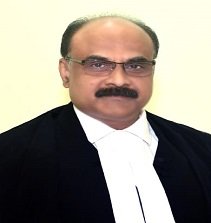
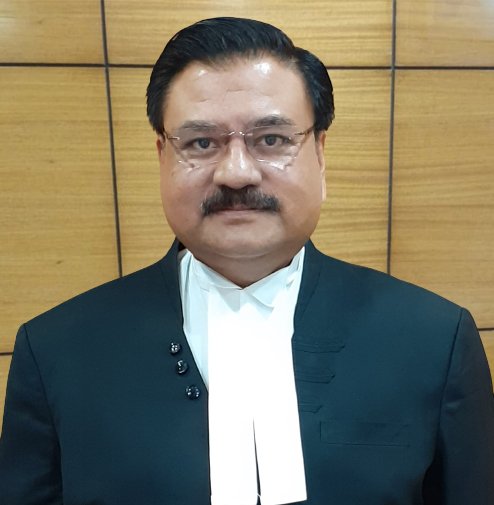
THE HON’BLE MR. JUSTIC MANASH RANJAN PATHAK
AND
THE HON’BLE MR. JUSTICE SASHIKANTA MISHRA
Date of Hearing: 10.02.2026 Date of Judgment: 19.02.2026
SASHIKANTA MISHRA, J.
The appellants question the correctness of the
judgment and sentence passed by learned Additional
Page 2 of 17
Sessions Judge, Angul on 03.04.2001 in Sessions Trial
Nos.133-A/1998 (1 of 1998), whereby they were convicted
for the offence under Sections 302/148 of IPC and
sentenced to imprisonment for life.
2. Prosecution case, briefly stated, is that a piece of
government land in village Kampasal in Angul district was
under the possession of deceased-Sukadev Dehury.
Having heard on the evening of 30.01.1998 that members
of Keuta community had raised ridges to encroach upon
said land, he, accompanied by his son Sanatan and
brother Somanath, went to the spot at about 7.00 a.m. on
the next day. Seeing that ridges had been constructed,
they dismantled the same with their hands. At that time,
the mother of Jharu Behera came and protested,
whereupon Biswanath (informant) told her that the land
had been measured in the previous year and found to be
government land as per the R.I.’s version and that if it was
found to belong to the objectors, they would give up the
same. Hearing this, the mother of Jharu went away. Half
an hour later, accused Jharu Behera, his son Rabi
Behera, Bandhu Behera, Chhabi Behera, Thaka Behera,
Page 3 of 17
Rathi Behera and Anil Behera being armed with Tablas
and Lathis (stick), came to the spot and threatened to kill
them. Chhabi assaulted Sukadev by giving a blow with the
Tabla on his leg due to which he fell down. When the
informant tried to snatch away the Tabla, Chhabi also
dealt a blow causing bleeding injury on his thigh. Chhabi
then dealt a Tabla blow on the neck of Sukadev. Anil and
Thaka also assaulted Sukadev with Tablas. The other
accused persons assaulted Sanatan. As a result of such
assault, Sukadev died. The informant ran away from the
spot and informed his brother, Suresh and thereafter both
went to the police station and lodged a report. Basing on
such report, Chhendipada P.S. Case No. 6 of 1998 was
registered followed by investigation. Upon completion of
investigation, charge-sheet was submitted against all the
accused persons under Sections 147/148/302/307/149
of IPC.
3. The defence plea was of denial. Additionally, it
was claimed that the incident had occurred in course of a
quarrel in which the deceased attempted to kill accused-
Chhabi.
Page 4 of 17
4. To prove its case, prosecution examined thirteen
witnesses and proved fifteen documents and seven
material objects. The defence examined two witnesses,
including accused-Chhabi Behera as D.W. 2.
5. The trial Court found from the evidence on record
that there was enmity between the two groups, which was
aggravated by the act of the accused persons in raising a
ridge on the land which the deceased, Sukadev claimed to
be his. When Sukadev dismantled the ridge being
accompanied by others, the mother of Jharu, being
present, protested and thereafter went away. Evidently
informed by her, the accused persons came to the spot
armed with deadly weapons and assaulted the deceased
and others, causing his death. The trial court found the
death homicidal in nature in view of the oral and medical
evidence. The contradictions in the evidence of witnesses
relating to the number of blows and sequence of the
offence were brushed aside by holding that the same was
natural, as the witnesses had been examined after a long
time. Taking into consideration the evidence of the
informant (P.W.1), the injured witnesses (P.Ws.3 and 4),
Page 5 of 17
and other post-occurrence witnesses, the trial Court
found that there was clear evidence that the deceased
sustained injuries due to the assault by the accused
persons and died. The defence evidence was not believed,
as there was no evidence of any injury having been
sustained by D.W.2, as claimed by him. The plea of
exercise of right of private defence was thus disbelieved.
On such finding, the trial court, while holding that the
evidence was not sufficient to prove the offence under
Section 307 of IPC, held the accused persons guilty of the
offence punishable under Sections 302/148 of IPC. They
were thus convicted and sentenced to imprisonment for
life.
6. Being aggrieved, the accused/appellants have
preferred the present appeal.
7. Heard Mr.S.K. Dash, learned counsel for the
accused-appellants and Mr. P.S. Nayak, learned AGA for
the State.
8. Mr. Dash assails the impugned judgment of
conviction and sentence on the following grounds:-
Page 6 of 17
i. The contradictions in the evidence of the
informant and eyewitnesses, being material, could
not have been brushed aside by the trial Court.
ii. Though it is claimed that all eight accused
persons had assaulted the informant and others
yet, only four injuries were found on the body of the
deceased.
iii. The weapon of offence was never recovered.
iv. The trial Court having accepted that there was
dispute between the parties relating to land, should
not have brushed aside the evidence of D.W.2.
iv. Even accepting the evidence on record, the case
would not fall within the definition of murder, but
one caused due to provocation.
9. Per contra, Mr. Nayak would contend that the
evidence adduced by the prosecution through eyewitness
accounts of P.Ws.1, 2, 3 and 4 is clear, consistent, reliable
and trustworthy. The contradictions, if any, are minor in
nature, having no significant effect. Since it was clearly
proved that the accused persons came to the spot being
armed with deadly weapons and assaulted the deceased
Page 7 of 17
and others causing injuries as a result of which the
deceased expired at the spot, the trial court rightly held
them guilty and convicted them.
10. We have carefully considered the rival contentions
noted above and have gone through the case record. There
is no dispute that deceased, Sukadev having sustained
injuries on his body died as a result. The autopsy surgeon
(P.W.12) clearly stated that the incised wounds found on
the body of the deceased are possible to be caused by a
sharp cutting weapon like, tangia or tabla. Defence has
not disputed that the death of the deceased was homicidal
in nature. Turing to the occurrence, it is seen that the
informant (P.W.1) described the offence in vivid detail with
his version being fully corroborated by the other injured
eyewitnesses (P.Ws.3 and 4). We have gone through their
depositions in detail. The consistent version of these
witnesses is that the dispute arose when it was found by
the informant that the accused persons had raised a ridge
over the land which, was though government land, but
under his cultivating possession. The informant,
accompanied by the deceased and P.Ws.3 and 4
Page 8 of 17
dismantled the ridge with their hands to which the mother
of accused, Jharu protested. The informant assured that if
it was found that the land actually belongs to the accused
persons, they would give up their claim, regardless of the
expenditure already made by them. Hearing this, the
mother of Jharu went away. A short while later, all the
accused persons being armed with tangia, tabla and badis
(stick) came to the spot and assaulted the deceased and
others causing injuries. Sukadev sustained injury on his
head and other parts of the body and died on the spot.
Certain contradictions were pointed out by the defence,
but the trial court brushed aside the same and according
to us, rightly so as the witnesses were deposing after a
long time. We have also not found any reason to disbelieve
the version of the witnesses.
11. Turning to the grounds raised by accused
persons before us, we are of the view that it is only
natural for the witnesses to fail to depose with
mathematical precision about an occurrence, which took
place a long time ago. This takes care of the first objection
raised by Mr. Dash.
Page 9 of 17
12. As regards the number of injuries, the
postmortem report shows that deceased sustained as
many as nine injuries with several on vital parts of his
body, namely, neck and head. Therefore, there is nothing
to disbelieve the prosecution witnesses that all the
accused persons had assaulted the deceased, causing
injuries.
13. As to the objection that the weapons of offence
were never recovered and seized, we are not inclined to
place much importance on this, for the reason that when
direct evidence in the form of eyewitness accounts of the
occurrence are available, non-recovery of the weapon of
offence, which may be a lapse in investigation, cannot be
treated as material to the case. This is being said for all
the more reason that there is clear evidence of injuries
having been caused due to sharp cutting weapons
resulting in death.
14. Coming to the next ground raised by Mr. Dash
that the trial court brushed aside the defence evidence
(D.W.2) without valid reason, we find that according to
D.W.2, the deceased was the aggressor as he allegedly
Page 10 of 17
assaulted D.W.2 by means of a tangia. One of the blows
struck his back and the other, though aimed at his head,
landed on his hand. The other witnesses gave him two
blows with tangia on his leg. However, not a shred of
evidence was put forth to prove the injuries allegedly
sustained by D.W.2. Therefore, the plea of exercise of the
right of private defence was rightly rejected by the trial
Court and we concur with the same.
15. The last ground raised by Mr. Dash is that even
accepting the case of the prosecution as a whole to be
correct, it would still not be a case of murder but culpable
homicide not amounting to murder. In this context, Mr.
Dash would argue that there being evidence of a land
dispute between the parties and of the informant and his
group dismantling the ridge raised by the accused
persons, it would amount to an act of provocation. Such
act was initially protested by the mother of accused-
Jharu but when it yielded no result, she informed the
accused persons who went to the spot. Only because they
were armed with weapons does not mean that they
planned to kill anyone much less the deceased.
Page 11 of 17
16. Per contra, Mr. Nayak would argue that the
very fact that the accused persons came to the spot being
armed with deadly weapons proves their intention to
cause such bodily injury as would result in death. The
trial court, according to Mr. Nayak, must be held to have
rightly convicted the accused persons for committing
murder.
17. In order to better appreciate the rival contentions,
we feel it proper to once again refer to the sequence of
events that unfolded on the fateful day even at the cost of
repetition. The informant claims that on the previous
evening, he was informed by the deceased that the
accused persons had raised a ridge on the land, which he
had cultivated. The informant, accompanied by his son
Sanatan, brother Somanath and deceased went to the
spot in the morning. The FIR mentions the time as 7.00
A.M. They removed the ridge to which the mother of the
accused Jharu protested. She left the spot and after about
half an hour, the accused persons came to the spot and
assaulted the deceased and others. The FIR was lodged at
10.A.M. on the same day. We thus find that there was
Page 12 of 17
very little time gap between dismantling of the ridge,
protest by Jharu’s mother and the actual occurrence. The
whole thing appears to have occurred within a short span
of about an hour, more or less. According to our
considered view, it is too short a time period for the
accused persons to have planned specifically to commit
murder of the deceased. In any event, it was the informant
who interacted with Jharu’s mother and therefore, the ire
of the accused persons, if at all, ought to have been
naturally directed against him. No role was played by the
deceased during such interaction. This raises a doubt as
to the motive of the accused persons to come to the spot
with a pre-meditated mind of causing his death. In a
country like India where majority of the rural population
sustains on agriculture, dismantling a ridge raised by the
accused persons can certainly be treated as an act of
provocation. Therefore, the genesis of the actual assault
most certainly lies in such act of the informant and his
group. Such being the case and particularly given the
short period of time during which the entire incident
occurred, it is difficult for us to believe that the accused
persons were actuated with the intent of causing death of
Page 13 of 17
the deceased. We say so also for the reason that accused
Chhabi dealt the first blow with the tabla on the leg of the
deceased, which can hardly be treated as a vital part of
body or that it, by itself, could have caused death, though
the second blow was on the neck. On the contrary, it can
be reasonably inferred that because of the provocation
caused by dismantling of the ridge raised by them by the
informant and his group, a quarrel ensued between the
two groups in course of which the accused persons
assaulted the other group. The assault being by means of
sharp cutting weapons and on some vital parts of the
body, resulted in death of the deceased.
Exception-1 of Section-300 relates to grave and
sudden provocation. In the case of K.M. Nanavati v.
State of Maharashtra
1, the Supreme Court held as
follows:-
“85. The Indian law, relevant to the present
enquiry, may be stated thus : (1) The test of “grave
and sudden” provocation is whether a reasonable
man, belonging to the same class of society as the
accused, placed in the situation in which the accused
was placed would be so provoked as to lose his self-
control. (2) In India, words and gestures may also,
under certain circumstances, cause grave and sudden
provocation to an accused so as to bring his act
within the First Exception to Section 300 of the Indian
1
1961 SCC OnLine SC 69
Page 14 of 17
Penal Code. (3) The mental background created by the
previous act of the victim may be taken into
consideration in ascertaining whether the subsequent
act caused grave and sudden provocation for
committing the offence. (4) The fatal blow should be
clearly traced to the influence of passion arising from
that provocation and not after the passion had cooled
down by lapse of time, or otherwise giving room and
scope for premeditation and calculation.
84. Is there any standard of a reasonable man for the
application of the doctrine of “grave and sudden”
provocation? No abstract standard of reasonableness
can be laid down. What a reasonable man will do in
certain circumstances depends upon the customs,
manners, way of life, traditional values etc.; in short,
the cultural, social and emotional background of the
society to which an accused belongs. In our vast
country there are social groups ranging from the
lowest to the highest state of civilization. It is neither
possible nor desirable to lay down any standard with
precision : it is for the court to decide in each case,
having regard to the relevant circumstances. It is not
necessary in this case to ascertain whether a
reasonable man placed in the position of the accused
would have lost his self-control momentarily or even
temporarily when his wife confessed to him of her
illicit intimacy with another, for we are satisfied on
the evidence that the accused regained his self-control
and killed Ahuja deliberately.
86. Bearing these principles in mind, let us look at
the facts of this case. XX XX XX”
18. Prosecution has not adduced any evidence to
show that the accused persons harbored any ill-will
against the informant Biswanath, deceased Sukadev, his
son Sanatan and brother Somanath at any time prior to
the occurrence. Therefore, we are of the considered view
that the case would not fall within the definition of
‘murder’ under Section 300 of IPC, punishable under
Page 15 of 17
Section 302 of IPC. Rather, it would be a case of culpable
homicide not amounting to murder being covered by
Exception-1 to Section 300.
19. We are persuaded to say so because, by
assaulting the deceased and others with deadly weapons
and causing injuries on vital parts of the body, the
accused persons must be held to have knowledge that
such injuries were likely to cause death, though without
any intention to cause death. This is, therefore, a case
squarely covered under Part-2 of Section 304 of IPC. The
impugned judgment, therefore, warrants interference to
the above extent.
20. Coming to the sentence to be imposed, Part-2 of
Section-304 of the IPC prescribes punishment of
imprisonment extending to ten years. It is seen that all
the accused appellants are on bail in terms of orders
passed earlier in this appeal. We have also received a
report from the IIC of Chhendipada P.S. on 23.10.2025
that accused appellants Jharu Behera and Rathi Behera
are presently very old and confined to their own homes.
These two accused persons were aged more than sixty
Page 16 of 17
years at the time of the occurrence that is, in the year
1998. As such, we feel it would serve the ends of justice if
the punishment is confined to the period of imprisonment
already undergone by them during the trial. However, in
case of the other accused appellants mainly, (i) Rabi@
Rabindra Behera, (ii) Thaka @Bikram Behera, (iii)
Chhabi@Chhabila Behera, (iv) Baya@Baidhar Behera, (v)
Ani@Anil Behera and (vi) Bandhu@Gopabandhu Behera,
the sentence imposed by the trial court is modified to five
years R.I., with the period of imprisonment already
undergone by them to be set off.
21. In the result, the appeal is allowed in part. The
impugned judgment and sentence dated 03.04.2001
passed by learned Additional Sessions Judge, Angul in
Sessions Trial No.133-A/1998/1 of 1998 is modified to
the extent mentioned in the previous paragraph.
22. The bail bonds of appellant Nos.1, 3, 4, 5, 6 and 8
namely, Rabi@Rabindra Behera, Thaka@Bikram Behera,
Chhabi@Chhabila Behera, Baya@Baidhar Behera,
Ani@Anil Behera and Bandhu@Gopabandhu Behera
respectively stand cancelled and they be taken to custody
Page 17 of 17
forthwith to serve the remaining part of their modified
sentence.
……..………………… ..
Sashikanta Mishra,
Judge
Manash Ranjan Pathak, J. I agree.
.………..……………………
Manash Ranjan Pathak,
Judge
Orissa High Court, Cuttack,
The 19
th day of February, 2026/ B.C. Tudu

 Login with google
Legal Notes
Add a Note....